➡️ INTRODUCTION
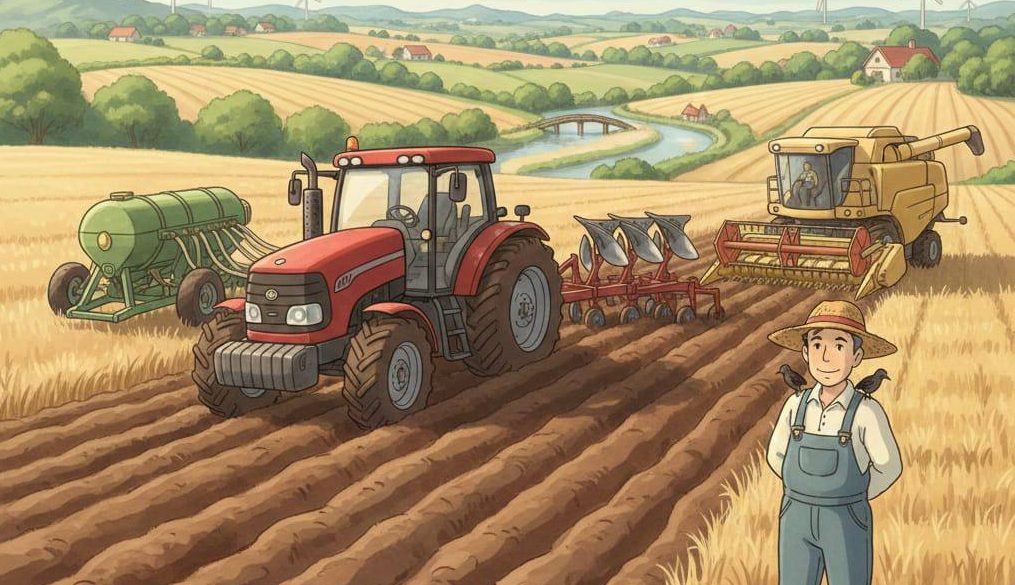
→ Agricultural machinery and equipment play a crucial role in modern farming by reducing manual labor, improving efficiency, and increasing overall productivity. From land preparation to harvesting and post-harvest handling, the right tools help farmers save time, reduce costs, and achieve better yields. With rising labor shortages and increasing demand for food, mechanization has become essential for both small-scale and large-scale farmers. Understanding how to select, use, and maintain agricultural machinery allows farmers to make smarter investments and avoid unnecessary expenses. This guide explains how farm equipment supports farmers, improves profitability, and ensures sustainable agricultural practices in the long term.
➡️ Key Points / Benefits
→ Reduces dependency on manual labor and saves time during peak seasons
→ Improves crop productivity and consistency of farm operations
→ Helps farmers manage larger land areas efficiently
→ Reduces long-term operational costs when used correctly
→ Enhances precision in farming activities like sowing and irrigation
→ Supports sustainable and climate-smart agriculture
🔵 1️⃣ → Importance of Agricultural Machinery in Modern Farming
Agricultural machinery has transformed traditional farming into a more efficient and reliable profession. Tools like tractors, seed drills, and harvesters help farmers complete tasks faster and with greater accuracy.
Key benefits include:
- Faster land preparation and planting
- Uniform seed placement for better germination
- Reduced crop losses during harvesting
Modern machinery also allows farmers to complete operations at the right time, which is critical for crop health. Delayed planting or harvesting often results in lower yields. By using appropriate equipment, farmers can improve soil management, reduce fatigue, and focus more on farm planning and market decisions.
🔵 2️⃣ → Types of Agricultural Machinery and Their Uses
Different stages of farming require different types of machinery. Understanding their specific roles helps farmers choose wisely.
Common machinery categories include:
- Land preparation tools: Tractors, ploughs, harrows
- Planting equipment: Seed drills, planters
- Crop care tools: Sprayers, weeders, cultivators
- Harvesting equipment: Harvesters, threshers
- Post-harvest tools: Grain cleaners, dryers
Selecting machinery based on crop type, land size, and soil conditions prevents overinvestment and underutilization. Small farmers can also consider multi-purpose machines that perform multiple tasks, reducing costs and storage needs.
🔵 3️⃣ → Choosing the Right Equipment for Small and Medium Farmers
Selecting the right agricultural equipment is a major decision, especially for small and medium farmers with limited budgets. The focus should be on affordability, durability, and local service availability.
Practical tips include:
- Assess land size and crop requirements before buying
- Choose fuel-efficient and low-maintenance machines
- Check availability of spare parts and service centers
- Consider shared ownership or custom hiring services
Avoid purchasing oversized or advanced machinery that exceeds actual farm needs. Proper selection ensures better return on investment and prevents financial stress. Farmers should also seek demonstrations or trial usage before finalizing purchases.
🔵 4️⃣ → Maintenance and Safe Use of Farm Machinery
Proper maintenance extends the life of agricultural machinery and ensures safe operation. Neglecting regular checks often leads to breakdowns during critical farming periods.
Best practices include:
- Regular lubrication and cleaning after use
- Checking bolts, belts, and moving parts
- Following manufacturer guidelines for servicing
- Training operators on safe handling procedures
Safety measures such as wearing protective gear and avoiding machine overloading reduce accident risks. Well-maintained machinery operates efficiently, consumes less fuel, and minimizes unexpected repair costs.
🔵 5️⃣ → Cost Management and Access to Machinery for Farmers
High machinery costs can be challenging, but several solutions help farmers access equipment without heavy financial burden.
Effective approaches include:
- Government subsidies and farm mechanization schemes
- Equipment rental and custom hiring centers
- Cooperative ownership among farmers
- Buying refurbished or second-hand machinery
Farmers should compare long-term costs rather than just purchase prices. Sometimes renting equipment during peak seasons is more economical than owning it. Smart financial planning helps farmers benefit from mechanization without compromising cash flow.
➡️ CONCLUSION
→ Agricultural machinery and equipment provide essential support to farmers by improving efficiency, reducing labor dependence, and increasing farm profitability. When chosen carefully and maintained properly, these tools help farmers complete tasks on time and achieve better crop outcomes. From small tools to advanced machines, every piece of equipment has a role in modern agriculture. Farmers who understand their needs, manage costs wisely, and follow safe usage practices can fully benefit from mechanization. Adopting the right agricultural machinery is a practical step toward sustainable farming and long-term income growth.