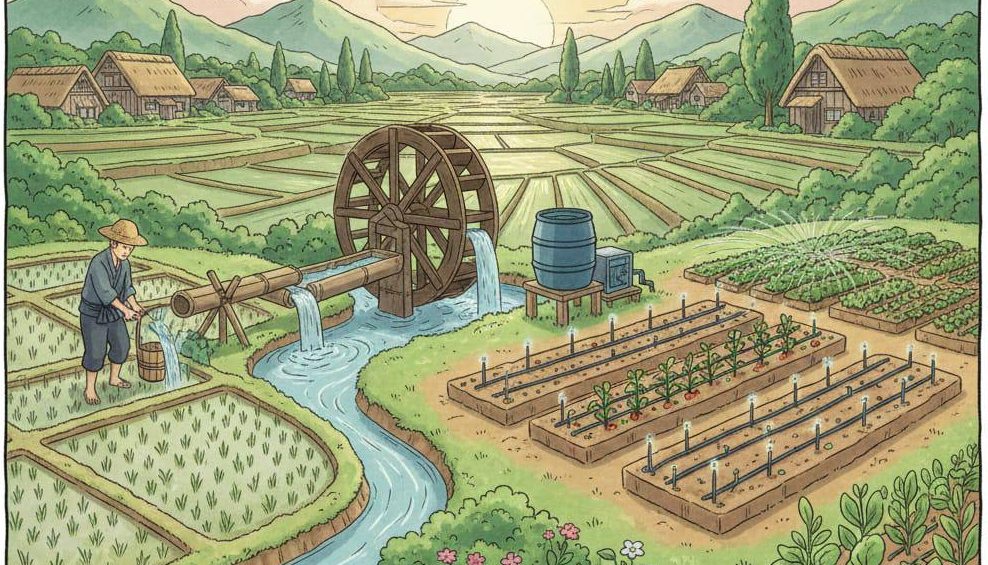
➡️ INTRODUCTION
→ Efficient irrigation techniques are essential for modern agriculture, especially in regions facing water scarcity or unpredictable rainfall. By adopting water-saving methods, farmers can deliver the right amount of water to crops at the right time, ensuring optimal growth while conserving valuable resources. Proper irrigation enhances soil health, prevents wastage, and improves crop yield and quality. With climate change increasing the frequency of droughts, smart water management is no longer optional—it is crucial for sustainable farming. Farmers who implement water-saving irrigation practices reduce costs, increase efficiency, and ensure long-term productivity, benefiting both their farms and the environment.
➡️ Key Points / Benefits
→ Conserves water while maintaining healthy crop growth
→ Reduces energy and labor costs associated with irrigation
→ Increases crop yield and quality through precise water application
→ Prevents soil erosion, waterlogging, and nutrient loss
→ Supports sustainable and climate-resilient agriculture
→ Enhances long-term farm profitability and resource management
🔵 1️⃣ → Traditional vs. Modern Irrigation Methods
Understanding the difference between traditional and modern irrigation is key to water saving.
- Traditional Methods: Flooding or furrow irrigation uses large quantities of water but often results in wastage due to evaporation and runoff.
- Modern Methods:
- Drip Irrigation: Water is delivered directly to the plant roots through tubes and emitters, minimizing evaporation and runoff.
- Sprinkler Systems: Water is distributed evenly over the field, suitable for uneven terrain and larger farms.
- Subsurface Irrigation: Water is delivered below the soil surface, reducing evaporation losses and promoting deep root growth.
Step-by-step: Analyze your field, crop type, and water availability to choose the most efficient irrigation method for your farm.
🔵 2️⃣ → Drip Irrigation for Water Efficiency
Drip irrigation is one of the most effective water-saving techniques for crops of all sizes.
Practical tips:
- Install mainlines and lateral tubes properly to ensure uniform water delivery.
- Use pressure regulators and filters to prevent clogging.
- Adjust emitters according to crop growth stages.
Benefits include 30–50% water savings, reduced labor, minimized weed growth, and healthier crops due to consistent soil moisture. Drip irrigation is particularly useful for fruit, vegetable, and high-value cash crops.
🔵 3️⃣ → Sprinkler and Micro-Irrigation Systems
Sprinkler and micro-irrigation systems provide flexibility for different crops and terrains.
- Sprinkler Systems: Suitable for cereals, pulses, and horticultural crops; they distribute water like rainfall.
- Micro-Irrigation: Small-scale localized watering for orchards or greenhouse crops.
- Tips for Efficiency:
- Schedule irrigation during early morning or late evening to reduce evaporation.
- Use timers to automate watering schedules.
Avoid overwatering or uneven distribution, which can waste water and damage crops.
🔵 4️⃣ → Water-Saving Farm Practices
Alongside modern systems, simple farm practices can enhance water efficiency:
- Mulching: Covers soil to reduce evaporation.
- Crop Rotation: Plant drought-tolerant crops in dry seasons.
- Contour Farming: Follows land contours to prevent runoff and conserve water.
- Rainwater Harvesting: Collects and stores rainwater for irrigation during dry periods.
Regular maintenance of irrigation equipment and monitoring soil moisture ensures these techniques remain effective over time.
🔵 5️⃣ → Planning and Monitoring for Maximum Efficiency
Proper planning and monitoring help farmers save water and reduce costs.
Step-by-step guidance:
- Conduct a water audit to understand farm water requirements.
- Divide fields into irrigation zones based on soil type and crop needs.
- Use soil moisture sensors or tensiometers to schedule irrigation precisely.
- Regularly inspect pipes, pumps, and emitters for leaks.
Do’s: Plan irrigation schedules, track water usage, and maintain systems.
Don’ts: Avoid uniform watering for all crops or neglect equipment maintenance, as it leads to inefficiency.
➡️ CONCLUSION
→ Adopting efficient irrigation techniques and water-saving practices is critical for sustainable and profitable agriculture. Modern methods like drip, sprinkler, and subsurface irrigation, combined with smart farm practices such as mulching, crop rotation, and rainwater harvesting, allow farmers to optimize water use, increase crop yield, and reduce costs. Regular monitoring and planning ensure every drop of water contributes to growth, protecting soil health and improving farm resilience. Farmers who integrate these strategies benefit from higher productivity, lower resource wastage, and long-term sustainability, making irrigation techniques and water saving essential for modern farming success.