➡️ INTRODUCTION
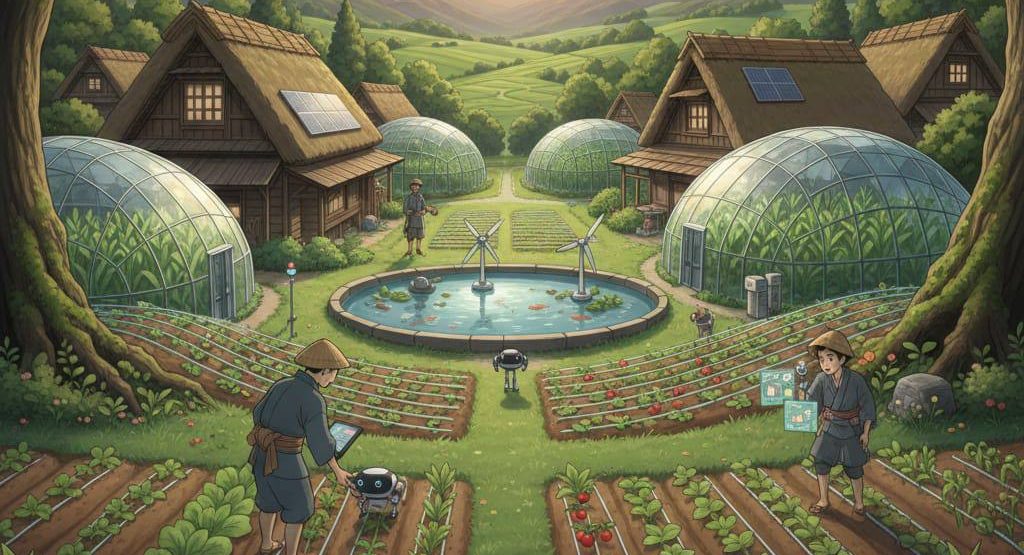
→ In rural areas, traditional farming often provides limited income due to small land holdings and fluctuating market prices. Modern farming income models combine technology, diversification, and value addition to increase profitability while reducing risks. By adopting innovative approaches such as high-value crops, livestock integration, agro-processing, and digital marketing, farmers can earn more income per acre and stabilize their earnings year-round. These methods also optimize resource use, including water, labor, and soil, making farming more sustainable. Understanding and implementing modern income models empowers rural farmers to improve their livelihoods, access better markets, and create resilient agricultural businesses that thrive even under changing conditions.
➡️ Key Points / Benefits
→ Maximizes income from limited land resources
→ Reduces dependency on a single crop or market
→ Encourages adoption of high-value and niche products
→ Integrates technology for efficient resource use
→ Opens opportunities for value addition and processing
→ Strengthens resilience against market and climate fluctuations
🔵 1️⃣ → High-Value Crop Cultivation
High-value crops, such as vegetables, fruits, spices, and medicinal plants, offer better returns than conventional crops.
Practical guidance:
- Select crops suited to local climate and soil conditions.
- Consider short-duration crops for multiple harvests in a year.
- Use organic or sustainable practices to attract premium buyers.
- Apply efficient irrigation techniques like drip or sprinkler systems to conserve water.
Benefits: Even small plots can yield significant income. By selling directly to local markets, retailers, or organic buyers, farmers can earn higher prices, ensuring consistent profitability per acre.
🔵 2️⃣ → Integrated Livestock Farming
Integrating livestock, poultry, or aquaculture with crop production increases revenue streams and reduces waste.
Step-by-step approach:
- Identify livestock suited to your farm size and climate, such as goats, cows, or poultry.
- Use crop residues as feed to reduce costs.
- Maintain proper housing, healthcare, and nutrition to ensure high productivity.
- Combine manure management with crop fertilization for better yields.
Advantages: Multiple income sources stabilize earnings and improve farm efficiency. Livestock products like milk, eggs, and meat can be sold locally or processed into value-added products for higher profits.
🔵 3️⃣ → Agro-Processing and Value Addition
Processing crops into products like juices, jams, pickles, or dried herbs enhances profitability.
Practical steps:
- Identify high-demand products in the local or regional market.
- Set up small-scale processing units with basic machinery.
- Ensure proper packaging and labeling to appeal to buyers.
- Maintain hygiene and quality standards to build trust and repeat customers.
Do’s: Focus on a few profitable products initially. Don’ts: Overproduce without market demand. Value addition converts raw produce into higher-income products, extending shelf life and market reach.
🔵 4️⃣ → Contract Farming and Direct Marketing
Contract farming and direct marketing reduce risk and increase revenue by ensuring buyers before production.
Guidance:
- Partner with local companies, cooperatives, or retailers for crop supply agreements.
- Explore e-commerce and digital platforms to sell directly to consumers.
- Maintain consistent quality and delivery schedules.
- Diversify buyers to avoid dependency on a single market.
Benefits: Farmers secure fair prices and avoid market price fluctuations. Contract farming provides guidance and sometimes inputs, while direct marketing ensures higher margins.
🔵 5️⃣ → Use of Modern Technology and Smart Farming
Adopting digital tools, precision farming, and mechanization increases productivity and reduces costs.
Step-by-step guidance:
- Use soil sensors, mobile apps, or drones to monitor crop health.
- Implement mechanized planting, weeding, and harvesting to save labor.
- Track water use with drip irrigation and rainwater harvesting.
- Analyze data to plan crop rotation and input management effectively.
Advantages: Smart farming reduces input waste, enhances yields, and improves decision-making. Farmers can allocate resources efficiently, reduce costs, and achieve consistent profitability even on small landholdings.
➡️ CONCLUSION
→ Modern farming income models provide rural farmers with practical pathways to enhance earnings and improve farm sustainability. By integrating high-value crops, livestock, agro-processing, direct marketing, and technology, farmers can diversify income sources, optimize resources, and stabilize revenue year-round. Adopting these models requires planning, monitoring, and continuous learning, but the long-term benefits include higher profitability, market access, and resilience against uncertainties. Farmers who implement these approaches can transform their rural lands into productive, income-generating assets, creating stronger livelihoods while contributing to sustainable agricultural growth in their communities.